

The Steps to Relaxing Your Pelvic Floor Muscles—and Relaxing Your Whole Body
Pelvic floor dysfunction is a general term that covers a number of issues women can face as they age, many of which can be traced back to weakened pelvic floor muscles.
But other women suffer from tight pelvic muscles, and in extreme cases that can lead to a syndrome known as hypertonic pelvic floor. This is when the muscles in your lower pelvis are in a state of constant contraction or spasm—whether that lasts for a temporary time or is constant.1
If this sounds like you, and you have tight pelvic muscles or your doctor has diagnosed you with hypertonic pelvic floor, here’s how to relax your pelvic floor muscles, and your whole body.
Tension in Your Pelvic Floor
The muscles and ligaments that support your pelvic organs in a hammock-like structure are known as your pelvic floor. This pelvic floor holds your bladder, bowel, and uterus in place, helps you control your bladder and bowel, and plays a role in enjoyment of sex.2
Strain on those pelvic floor muscles can create pelvic floor dysfunction, such as prolapse and incontinence. The strain may be a result of childbirth, obesity, chronic constipation, straining when you go to the bathroom, continuous heavy lifting, and other injuries that can weaken those important pelvic floor muscles.2
It’s not just loosened pelvic floor muscles that can create problems. A pelvic floor that is too tense can also lead to issues like incontinence, trouble emptying your bladder, and even pain during sex.2 Women are often told to perform Kegel exercises, squeezing and tightening our pelvic floor muscles, to ensure pelvic health. This is the wrong advice if you have tight muscles or hypertonic pelvic floor.3
Overactive pelvic floor muscles or hypertonic pelvic floor muscles is a condition where:
- there may be increased tension at rest
- you have increased voluntary or involuntary contractions
- there is a decreased ability to fully relax your pelvic floor muscles 3
Relaxing Your Pelvic Floor
If you’re having issues with tight pelvic floor muscles, it’s important to avoid constipation and straining.1 But pelvic floor tension can be helped by some simple exercises to relax the pelvic floor muscles—and as a bonus relax your whole body!
An exercise known as diaphragmatic breathing can relax your pelvic floor muscles and your whole body. Here’s how to do it:2
- Place one hand on your chest and another hand on your belly, just below your rib cage. Use the hand on your belly to know if you’re using your diaphragm correctly, since it should rise and fall as you breathe.
- Count to three as you take a deep breath in. This relaxes your pelvic floor.
- Count to four as you exhale, which returns your pelvic floor to its resting state.
- Practice this breathing exercise for 5-10 minutes each day.
Diaphragmatic breathing can also be performed in conjunction with adductor stretching. In this instance, you lie on your back with the soles of your feet together and knees out to the sides. If you aren’t relaxed, and instead feel a pulling along your inner thighs or in your pubic bones, place pillows under your knees for support.2
Another suggested exercise is called a table stretch:3
- Place your hands on the wall, with your feet just a little wider than your hips and your toes slightly turned in. If your hamstrings are tight, slightly bend your knees.
- Think of rolling your sit bones upwards and feel them stretch wide.
- Breathe into your pelvic floor for 60 seconds.
Yoga for Tight Pelvic Floor Muscles
While yoga can be used to strengthen your pelvic floor, it can also be used to perform relaxing stretches. Done in conjunction with deep breathing, yoga can help relax your pelvic floor muscles and in fact your whole body.
Here are some pelvic girdle yoga stretches that—particularly when done in conjunction with diaphragmatic breathing—can relax your pelvic floor: 4
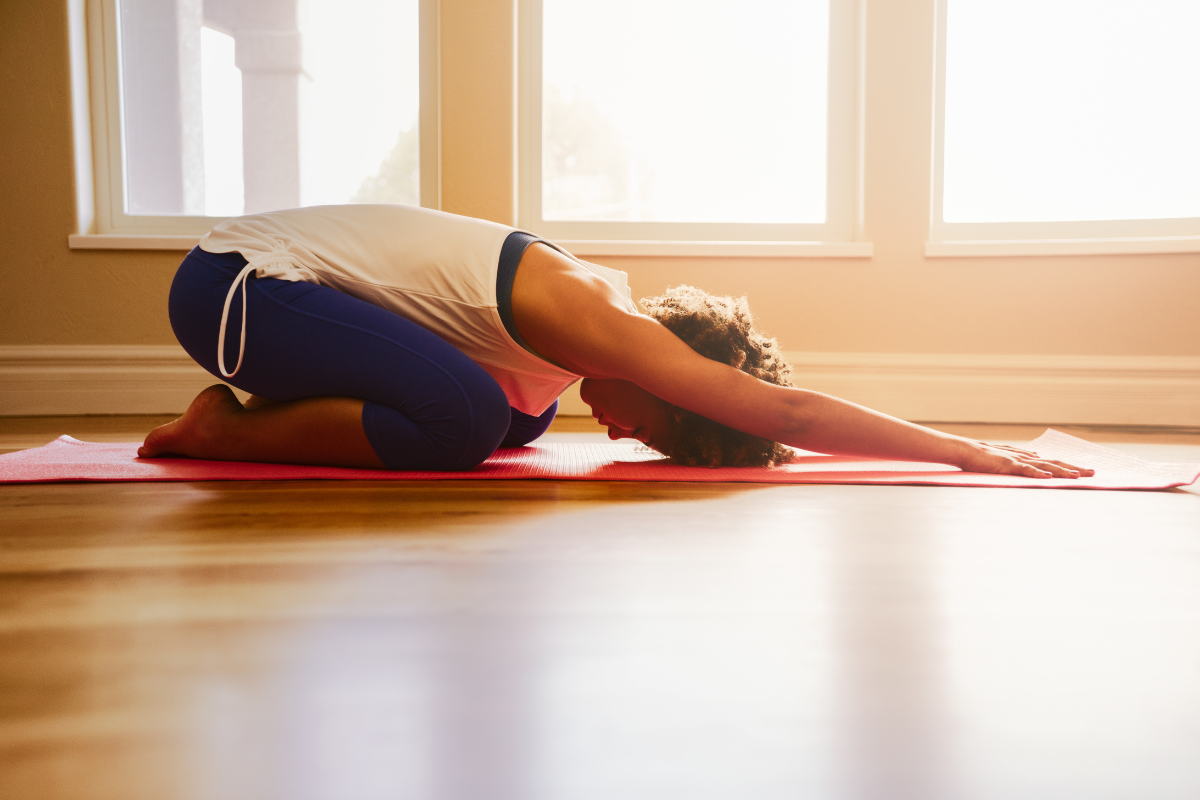
Child’s Pose: The classic yoga pose for relaxing, you simply get on your hands and knees, then spread your knees as far apart as you can, and keep your big toes touching while you stretch out your arms on the floor in front of you and touch your forehead to the ground.
Happy Baby Pose: Lie on your back and bring your knees up toward your chest. Keep them wide apart; raise your feet such that your ankles are raised above your knees. Support your legs with your arms if you need to; hold this position and gently rock from side to side without toppling over.
Piriformis Stretching or “Thread the Needle”: Lie flat on your back and bend your knees toward your chest; place your right ankle on your left knee to form the figure 4; pull your left thigh toward your chest so you can feel the outside of your right hip stretching; hold for 30 seconds and switch to the other side.
Often done in conjunction with yoga, those who practice mindfulness may also find it aids with relaxation. Journaling is another option—although it may not help with physical symptoms, positive emotional writing has been found to be beneficial for alleviating stress and anxiety.5
Re-Training Your Muscles
For some people suffering from pelvic floor dysfunction, treatment plans include retraining the pelvic floor muscles. This program is designed to help those with impaired ability to relax and to coordinate the pelvic floor and abdominal muscles that control the functions of the bowel and bladder.6
At the Mayo Clinic, for instance, a program using biofeedback training and behavior modification helps patients identify the sensations associated with relaxation and tension, isolate the pelvic floor from other muscle groups, and identify strategies to relax.6 This type of treatment is not one you would perform at home, so it’s important to first be diagnosed for your condition.
Ask a Doctor
If you’re suffering from tight pelvic floor muscles, or you suspect you have hypertonic pelvic floor condition, see a doctor to obtain a proper diagnosis. The Pelvic Awareness Project has a Physician Finder that can help you find a doctor near you, to get a treatment, plan, or to refer you to a physical therapist who can help determine the proper exercises for your pelvic floor.2
References
1 https://my.clevelandclinic.org/health/diseases/22870-hypertonic-pelvic-floor
2 https://nafc.org/treatment/how-to-relax-your-pelvic-floor/
3 https://www.sydneypelvicclinic.com.au/overactive-pelvic-floor-muscles//
share on

Meet Tiffany Broadway
featured partners

insta

connect
more from Tiffany
No more posts from Tiffany.

The Living Well Issue Out Now!
Discover your ultimate guide to living a purposeful, balanced, and enriched life with the latest edition of Intentional Living Magazine — The Living Well Issue. This volume is thoughtfully curated to inspire and empower you with expert insights on wellness, personal growth, sustainable living, and mindful practices.
We’re honored to welcome Naomi Watts as our cover feature and we’re equally proud to feature beauty icon Bobbi Brown. Inside, you’ll find expert insights on strength training, spiritual design, toxin-free living and the power of reframing your financial future.
This volume reflects the heart of our ethos: Read it. Love it. Live it. It’s an invitation to slow down, nourish your life with meaning, and create space for what matters most.
Join a community of readers dedicated to living with authenticity, passion, and purpose. Inspiring you to Read it. Love it. Live it.

Get the latest articles straight to your inbox
Intentional Living Magazine is your ultimate guide to luxury style, properties, interiors, culture, wellbeing and best places to dine, shop & explore. Get the latest lifestyle news, ideas and tips from in-the-know experts.
you may also like

Beauty From The Inside Out
Through Mindful Med Health & Wellness, April Lee empowers her clients to celebrate their bodies, nurture their minds and feel confident in every season on...
Read Article
A Restorative Retreat at Canyon Ranch in Lenox: A Haven for Wellness
Image courtesy of Canyon Ranch “ Canyon Ranch is a place you’ll want to return to again and again. — Gayle Higginbotham ” Nestled in...
Read Article
The Secret Art Of Elevated Tablescapes
Photography by Maria Love Photography Table Wraps, founded in 1977 and located in Jericho, Long Island, has dedicated themselves to creating just that — extraordinary...
Read Article
Paralysis by Analysis: Navigating Your Hormonal Health
Karen Sullivan, Certified Functional Medicine Health Coach & Founder of The Wellness Stop shares her insights and actionable steps to help you take control of...
Read Article
Leave a Reply
You must be logged in to post a comment.